

Services
Support for Neurodivergent Kids, Teens, and Adults
Therapy should be a safe place to bring your whole self: wonderfully weird, maddeningly stubborn, occasionally boring, utterly exhausted, and unexpectedly inspired.
A lot of people spend years trying to figure out how much of themselves they are allowed to bring into the room. Too intense. Too sensitive. Too focused. Not focused enough. Too blunt. Too emotional. Too quiet. “Too much.” For people with autism, ADHD, giftedness, or other ways of experiencing and processing the world that fall outside the usual norm, this can become a lifelong theme.
Autism, ADHD, and giftedness are not the same thing. They overlap in some ways and differ significantly in others. Giftedness is not a diagnosis; autism and ADHD are. What they can have in common is that they remind us that human beings do not all come in one standard model.
What This Can Look Like
- Autism
- ADHD
- Giftedness
- Executive-Function Challenges
- Sensory Needs
- Self-Advocacy
How We Might Work
Masking, Unmasking, and Choice
There is a lot of discussion about unmasking, and I think that conversation is important. But I do not think the goal has to be never masking again.
Sometimes masking is useful. Sometimes it is protective. Sometimes it helps you manage a difficult family interaction, function at work, navigate a social situation, or even try to talk your way out of a speeding ticket. There are also situations in which masking can be genuinely important for safety.
Most people present different parts of themselves in different settings. The problem is not simply that a mask exists. The problem is when you have worn it for so long that you no longer know where the mask ends and you begin, or when you never have anywhere that it is safe to take it off.
Constant masking can be exhausting. Over time, it can contribute to burnout, disconnection, overwhelm, and that strange feeling of not being comfortable in your own skin. Therapy can be a place to sort some of that out: What is actually you? What did you learn to do because other people expected it? What adaptations help you, and in which situations? Which ones drain you? Where do you want to fit in, and where are you tired of trying?
I sometimes think of a healthier mask as something you create consciously rather than something forced onto you. It can be built from a real part of yourself. You can choose when to use it. You can put it on when it serves you and take it off again when it does not.
Just as importantly, you need places where you do not have to wear one at all.
Therapy Is Not About Making You More “Normal”
Autism, ADHD, and giftedness are not illnesses therapy is trying to cure. They involve different ways of processing information, regulating attention, experiencing emotion, responding to the environment, understanding other people, and making sense of the world.
Those differences can bring real strengths. They can also bring real costs. I am cautious about reducing neurodivergence to either extreme. Calling everything a “superpower” can minimize the parts that are painful, frustrating, disabling, lonely, or exhausting. Describing everything as a deficit can erase creativity, insight, intensity, passion, pattern recognition, unusual ways of thinking, and abilities that may be deeply valuable.
Sometimes there is value and pain in the very same trait.
Therapy with me is often about understanding both. We may work on executive-function challenges, overwhelm, emotional regulation, communication, relationships, self-advocacy, sensory needs, or finding strategies that actually work for you instead of repeatedly forcing yourself into systems that do not.
Sometimes the question is, “What skill would help here?” Sometimes it is, “What accommodation is needed?” And sometimes it is, “Why are we assuming you are the part that has to change?”
Belonging Without Erasing Yourself
One of the hardest parts of being different can be loneliness. When fewer people process the world the way you do, it can take more effort to find people who understand you. It can be harder to recognize your own needs, harder to explain them, and harder to advocate for yourself when the people around you assume that their way of experiencing the world is simply the normal one.
Belonging does not have to mean erasing yourself.
Sometimes it means finding ways to participate in the larger community while still being yourself. Sometimes it means understanding the rules well enough that you can decide when following them makes your life easier and when they are not worth your energy. Sometimes it means creating community rather than waiting for one that fits perfectly: finding friends, chosen family, other neurodivergent or gifted people, or simply a few relationships where you do not have to constantly translate yourself.
A lot of this comes down to agency.
You can understand expectations without automatically obeying every one of them. You can decide when adapting serves you and when it costs too much. You can learn skills without deciding that who you are is a problem to be fixed. You can ask for accommodations. You can choose when to explain yourself and when not to. You can fit in when you want to, stand out when you want to, and sometimes decide that a particular box was never worth squeezing yourself into in the first place.
Therapy can address specific problems, build skills, support advocacy, and help you navigate the world more effectively. But in this kind of work, therapy is also deeply supportive. It gives you room for self-exploration without immediately turning that exploration into a project for self-improvement.
You will also learn fairly quickly in a room with me that you do not have to be perfect to show up. I do not expect perfection from the people I work with, and I do not pretend to offer it myself. We can lose our train of thought, circle back, get something wrong, laugh, try again, and still do meaningful work together.
The goal is not to make you more normal.
It is to help you understand yourself, have more compassion for yourself, and have more choice about how you move through the world.
You can learn the rules without surrendering your right to decide when and how to use them. You can belong without disappearing into the group.
And sometimes, you can just be weird.
Approaches I May Draw On
- Person-Centered
- CBT
- ACT
- Narrative
- Mindfulness-Based
- Trauma-Informed
- Family Systems
- Attachment-Based
- Motivational Interviewing
- Strengths-Based
- Compassion-Focused
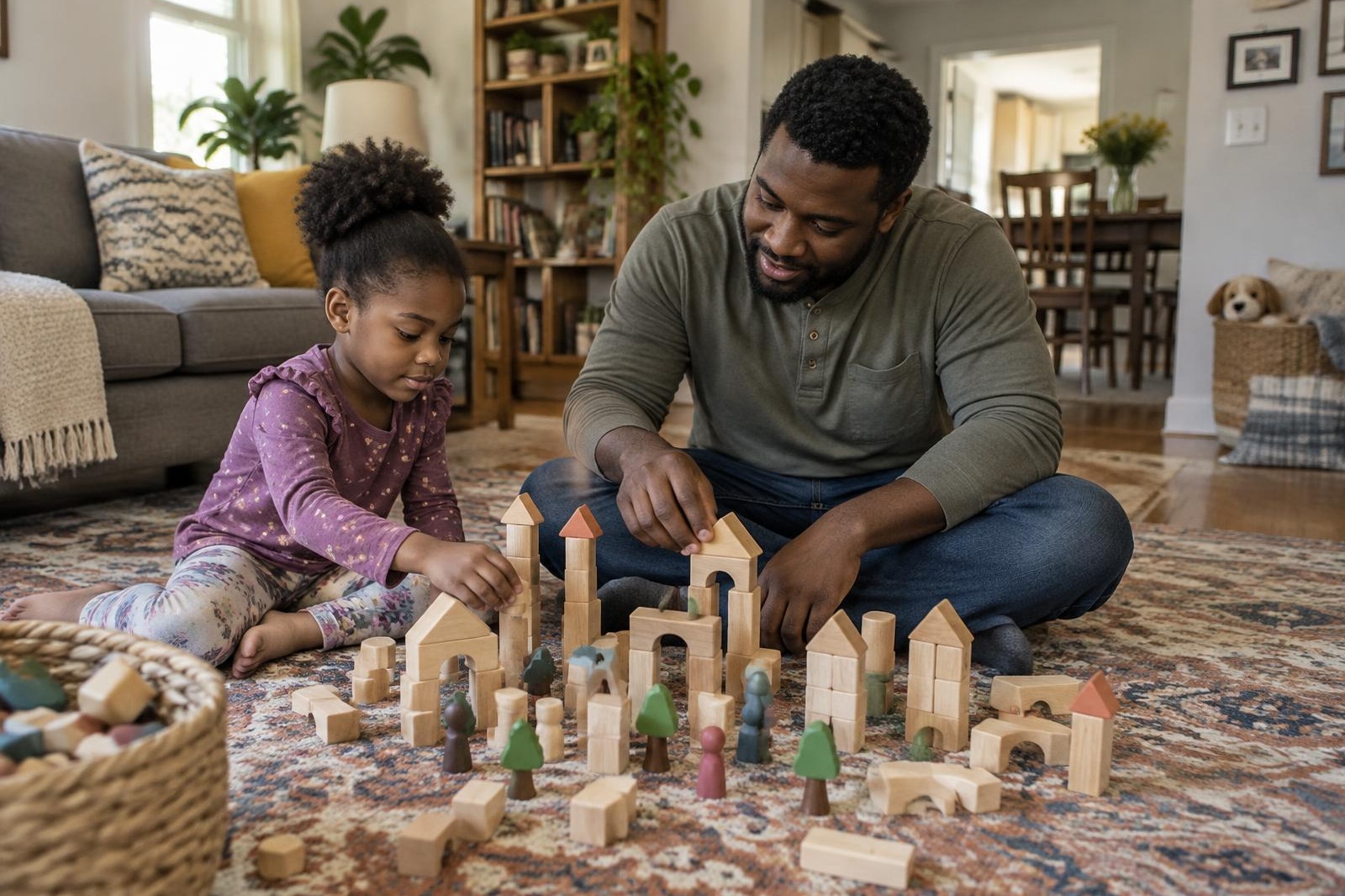
- Play-Based Approaches
I don’t choose a theory and make you fit it. I draw from different approaches depending on who you are, what we’re working on, and what actually seems useful.
In-Home or Virtual
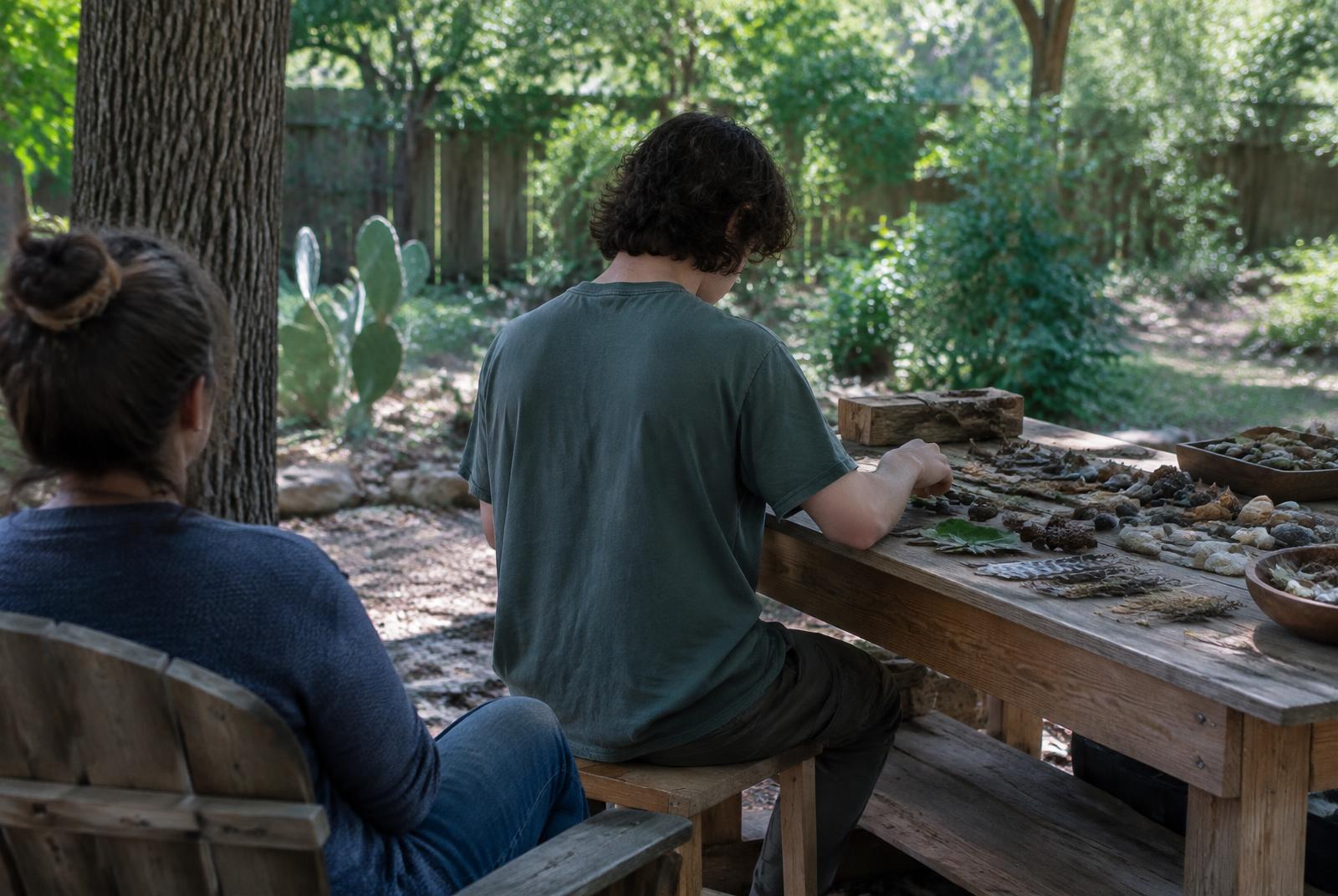
Therapy is available virtually for clients throughout Texas. In-home therapy may also be available in Killeen, Copperas Cove, Temple, and surrounding communities when it's a good fit for the client and the work we're doing.



You don't need to have everything figured out before you contact me.
Just tell me a little about what you're looking for, and we can go from there.
Contact