
Guides
How Does Play Therapy Work for Young Children?
Play Is Part of Their Language
Parents often wonder if therapy is even happening.
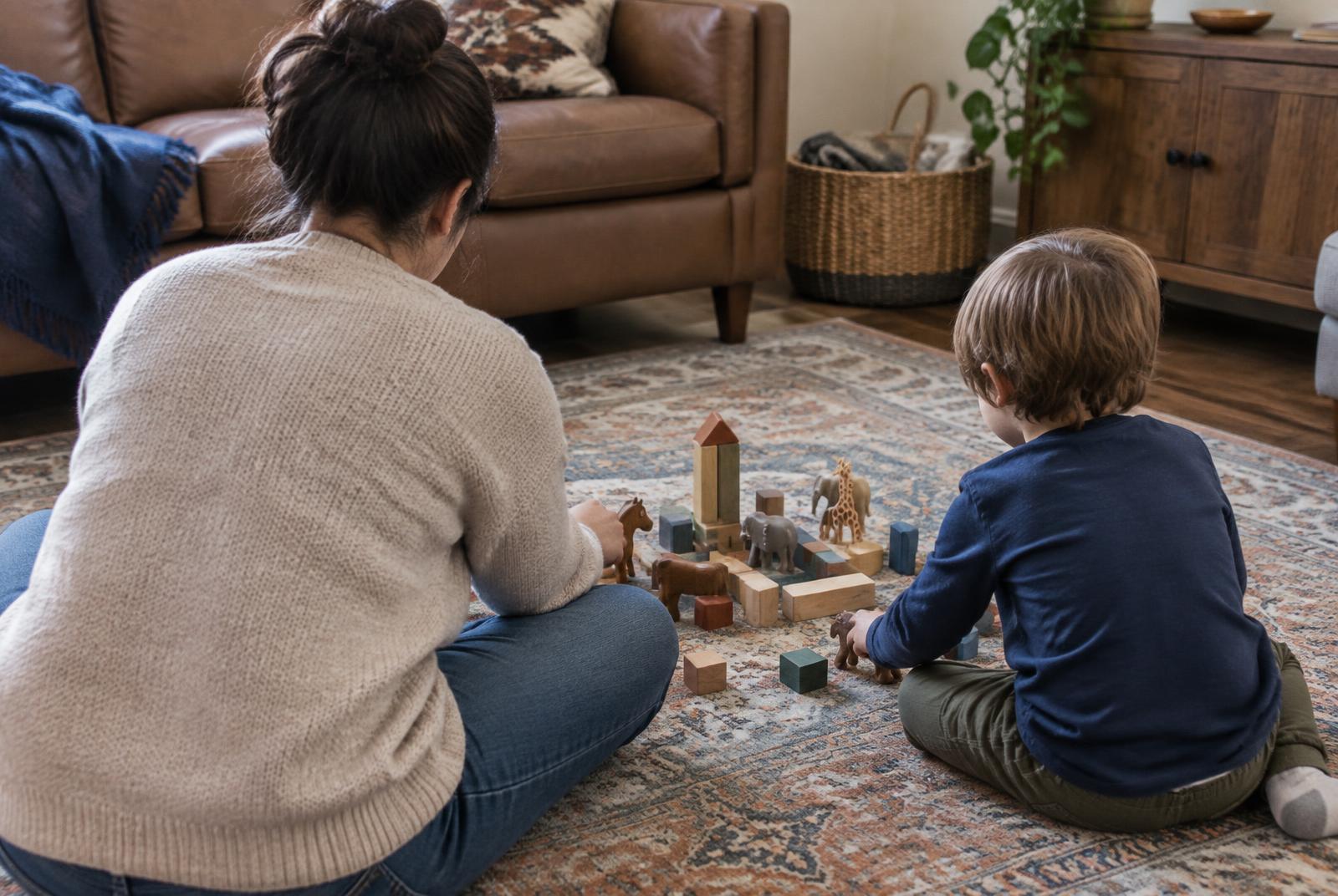
Sometimes, from the outside, it really can look like I just came over and played with your kid. We may be playing with action figures, building with Legos, throwing a ball, playing a board game, making up stories, or talking about a video game. And I understand why a parent might look at that and think, What exactly are we doing here?
But the important work of childhood often happens through play.
Play is the language of childhood. It is how children explore the world, express feelings, practice relationships, solve problems, test ideas, and make sense of what is happening around them. Young children especially are not usually going to sit down and deeply analyze what they are feeling or explain why something is bothering them. Some kids are very verbal, but even then, play often gets us to things that words do not.
What a Session Can Include
So when it looks like I am “just playing,” I am often doing a lot more than that. I am entering the child’s world, building trust, watching for themes, helping them name feelings, practicing frustration tolerance, modeling relationships, noticing how they respond to limits or disappointment, and giving them a safer way to work through things they may not yet know how to explain.
And sometimes the child does not realize they are doing therapy either. To them, it may just seem like some slightly cool, kind of weird adult showed up and is willing to take their toys, games, and interests seriously. That is part of the therapy too.
We expect kids to somehow pick up a lot of these things on their own: waiting your turn, dealing with frustration, trying again, following rules, asking for a break, being a decent winner and a decent loser, noticing how someone else feels. But they do not always just develop automatically. That can be especially true for kids who are autistic or ADHD, kids who have been through trauma, or kids whose lives have been disrupted in other ways. Sometimes those skills need to be practiced.
And I think, as a society, we are not doing enough of that. We are not spending enough time teaching children some of these very basic relational and emotional skills that we just assume they will somehow learn.
Play therapy gives us a place to do that without turning every interaction into a lecture.
Parents Have a Place Too
One of the things that research across different kinds of therapy keeps showing us is how important the therapeutic relationship is. Play is one of the ways I build that relationship with children. They show me the things they care about. They teach me their games. They explain why this Lego creation is incredibly important. They get to show me their world, and I get to show them that I am interested enough to enter it with them.
Sometimes parents will hear me saying very similar things over and over while I play with a child. I may be labeling feelings. I may echo back what the child said so they know I heard them. I may wonder aloud what a character is thinking. I may point out that somebody kept trying even though something was hard. I may model how to disagree or how to repair something after it goes wrong.
It can sound repetitive because children learn through repetition. Anybody who has ever had to watch the same children’s show fifty times already knows this.
Which Setting Fits This Child
Around Killeen, Copperas Cove, and Temple, in-home therapy may be an option when it is a good fit. A child's own space can offer familiar materials and routines, but a busy home may also bring interruptions. We should consider both sides. Virtual sessions are available when a child is in Texas, though screens are not the right fit for every young child.
If you are deciding how to begin, you can tell me what your child is comfortable with and what privacy or space you have at home. I handle scheduling directly. We can have a free 15-minute introductory conversation first, especially when you have questions about who would participate.
Beginning With a Child's Story
With an older child or teenager, I may spend part of a session watching them play a video game, talking about a character they care about, looking at memes or TikToks, or using something from their online world as a way into a conversation. Different parents have different rules about what their kids are allowed to watch, play, or follow, and that is okay. I do not introduce kids to material their parents would not be comfortable with. If I have concerns about something, I will talk with the parent privately. But if a kid is already interested in something, I can often find something useful in it.
Keep Reading